A.V. LAGUTKIN,
doctor of the jurisprudence, full member of the Russian Academy of Natural Sciences, member of Presidium of the Russian Academy of Natural Sciences, chairman of office of problems of management of the Russian Academy of Natural Sciences 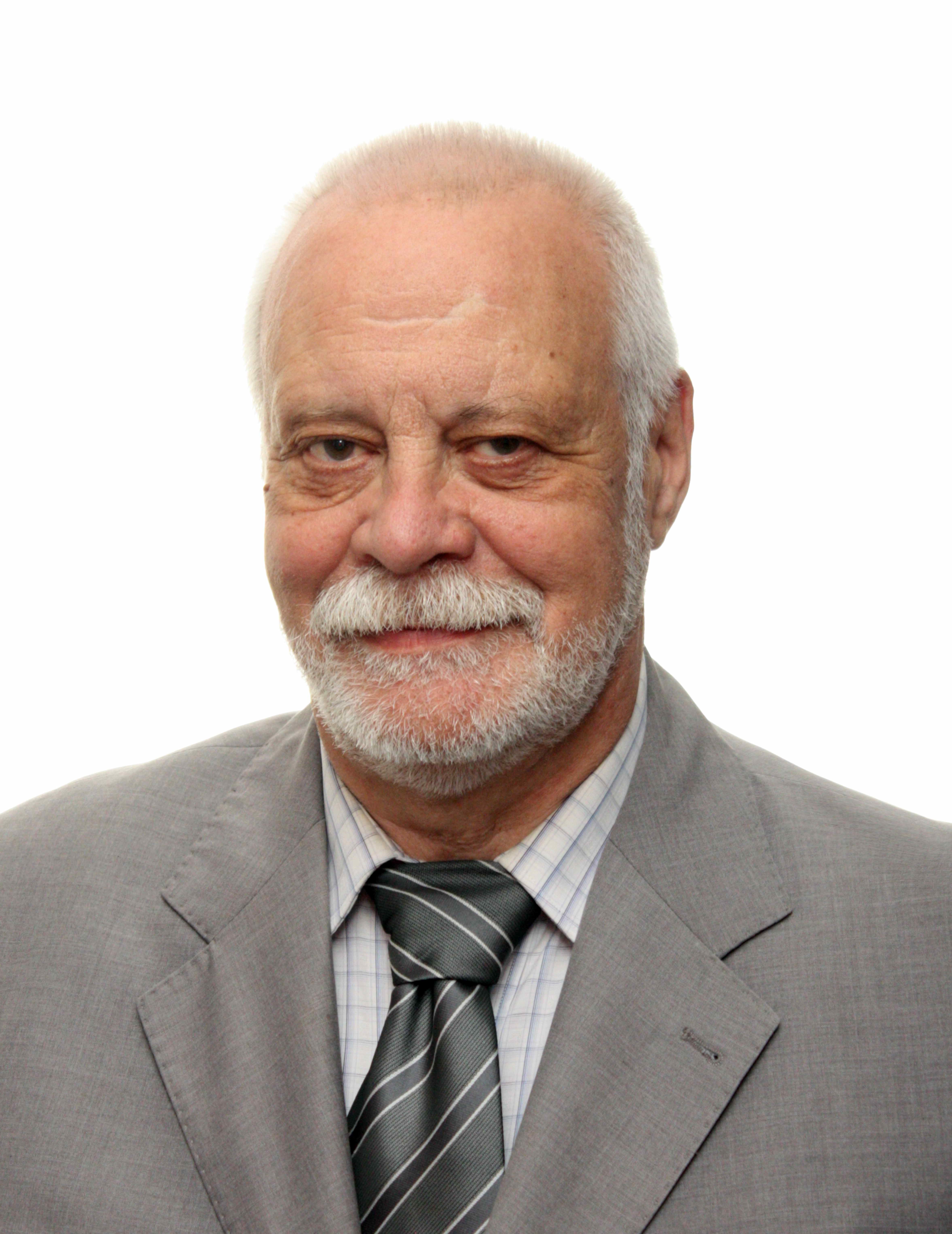
The civil society is conventionally thought to serve as the groundwork for a democratic social system. The better civil society is developed, the more grounds for democratic forms of government – and vice versa. In Russia at a Crossroads: Where Shall We Go? we wrote:
When we are looking for solutions of the extremely complex problem of attaining harmony and balance in the society-state relationship (and this is no exaggeration, for the problem is extremely complex and vital for the entire country), we have to look at the concept of social contract.
Within the existing reference frame, it is the social contract, i.e., a contract between the state and the civil society; and it is no virtual thing, but one very real, consensual, mutually acceptable, mutually binding, and based on equal rights. As for the civil society, we understand it as a community of independent subjects (citizens) existing within the state and creating moral and material values both for the sake of both the community itself and the state.
Regretfully, the current Russian Constitution, albeit a direct-action document, does not provide for a real and adequate state-society cooperation. It is known that the 1992 draft Constitution created by the Constitutional Commission featured a section dealing with the civil society, a planned attempt to settle the complex interlinks between the state and the civil society, elevating them to a level of on-par relationship. However, Yeltsin’s 1993 Constitutional Council failed to include such a section in the country’s basic law, although world constitutions don’t limit themselves to regulating the structure of the state and delimitating the citizens’ freedoms .
So, it didn’t happen because the society oversaw the importance of regulating the complex interlinks with the state, whereas the state was not prepared for making advances. Today, it seems, the situation is different. This can be seen from what happened on Bolotnaya Sq. and Sakharov Av.; other stable civil societies coming into existence; pluralism seen in an increased variety of legal political parties, and, say, re-installed elections of regional leaders. Conceivably, such processes are not limited to Russia.
It is worth trying to ‘be friends’, to put it childishly. And if that mantra is to be put to practice, then we suppose some of the sharpest society-state collisions emerging in the two recent decades can be eliminated. These collisions, seen for example in the obvious discrepancy between the income of the 1.5–2% and the rest of Russia’s populace, are all set to wreak havoc on the construction created for governing the state and the society. No one will ask for more, as they say.
When we talk about democracy as a trend in state development, we can’t help remembering what Sir Winston Churchill said (quoted in the epigraph). Indisputably an expert on both the principles of democracy and their implementation, Churchill managed to describe the very essence of a democratic system. A democratic regime, indeed, guarantees free elections, accompanied by the all too familiar words used by modern advocates of democracy to make air move. Let’s try to make some sense of it.
What precedes the well-known mechanisms of democratic governance, all over the world? Before it comes to the general, direct, and secret elections (an apogee of democratic governance), political parties will engage in intense battle (or sluggish confrontation) trying to secure preferential economic treatment for their representatives (sponsors, lobbyists) under a post-election political construction.
We didn’t forget that politics was highly concentrated economy, did we? So let’s keep that in mind.
So, by means of having elections, we obtain a certain group of like-minded individuals entrusted by the voters to run the entire state, including their social lives. Securing for their lobbyists and sponsors an opportunity to serve their interests for a known period of time. Serving those interests by way of making statutory acts (laws).
It is thought that democracy peaked at the advent of direct universal suffrage, symbolising the expression of popular will, which, as we have just seen, is not exactly the case. By the way, most voters cast their ballots for the candidate they like the most, looking at their height, looks, voice, assertiveness, or pre-election and post-election promises which are never delivered but sound alluring. It happens everywhere in the world, all the time. And strings of voters follow the respective Pied Pipers, which is hard to admit inwardly.
One can’t disagree with Yuliya Latynina who asserts that the universal suffrage as an achievement of modern democracy is by no means the peak of human creativity in this sphere. Indeed, Hitler and some other figures have come to power exactly in this way, using fig-leaf constitutions such as the 1936 Soviet Constitution.
Now let’s talk about the parliament, i.e., the body of legislative power in a democratic state. It is well known what happened in 1993 Russia when the interests of parliamentarism and presidential power collided. The parliament, so to say, met its Maker. And today’s parliament, whose characteristics are well-known, has been called ‘no place for discussion,’ and is the place for something completely different. And everyone understands this much. That’s the way the cookie crumbles. And we have the free expression of the citizens’ will, the direct, general elections, to thank for that.
It appears obvious and reasonable that the voting rights must be granted to educated and motivated people with at least some idea of the paths and prospects of the country’s development for the nearest future. We are far away from the situation where every ‘citizen’ wants (or is able) to make such decisions.
So why don’t we filter them. The potential voter’s competence could be tested, like in a college, or in some other way; there might be qualifications, such as requiring a degree, and of course the age requirement – the voting age should by no means be as low as eighteen. Or the voter can receive a compensation for voluntarily renouncing his voting rights (as suggested by Y. Latynina). Which will significantly improve civil rights in Russia, because you will be offered a choice: to exercise your active suffrage, or not.
It must be said that elections for the Supreme Council of the USSR featured quotas for scholars, women, lathe operators, athletes, singers, film directors, and other kinds of candidates.
There are no quotas today, but the parliament reflects the entire society in professional diversity. Practically every trade is represented, save for the absence of real experts in state governance, legislative regulation, and economy, who have never been trained anywhere in Russia, and still aren’t – otherwise they would have already been in power. I’m waiting to be proven wrong on this.
A Russian poet wrote once that Galileo Galilei’s peer scholars were no less smart than Galilei himself, and knew that the Earth ‘moved,’ but they had families . I believe that my colleagues are no less smart than me, and have similar understanding of what’s really going on in the country.
Well – what is the earlier-suggested concept of non-governmental constituent community? Technically, politically, and legally – it is a ‘mega-parliament’ with a membership of dozens or hundreds of thousands of representatives of the civil society: highly educated and professionally trained people able to guide the parliament and, accordingly, the executive branch, as to where they should direct their activity so as to secure creating and substantiating ways of developing a democratic, law-based state and society, economy, and socio-cultural sphere for increased well-being and the preservation of the nation.
At the same time, the ‘mega-parliament’ must exercise control over the legislative branch making expert decisions and the executive branch rigorously implementing such decisions; it must also possess the authority to restrict the bodies of power to lawful behaviour. Of course, we are not insured against professional smart-talkers and corrupt, lobbying protégées getting in; we in Russia know what kind of characters these are. But it is not highly probable that such characters would be able to influence the decision-making process seriously because of careful selection and quite large size of this constituent community. Of course, it’s hardly plausible that those in power will voluntarily resign their authority and submit themselves to popular control.
However, about eight centuries ago, when first parliaments were founded, the issue of plausibility was on the agenda, too. Under that-time reference frame, the necessity of creating a parliament was due to the danger of the monarch losing power to feudal lords. Today, among other reasons, there is the danger of losing power, too, contrasted by the necessity of attaining state-civil society concord. Otherwise, current power-holders might lose their position, and not at all peacefully. In our opinion, this issue is particularly acute in Russia. The author may be wrong, though.
Such a structure became possible only recently, with the advent of the Internet as a medium for large-scale, free communication, allowing huge numbers of people to cast their ballots over a short period of time. Apparently, information and telecommunication systems united in a situation centre must be used.
Yesterday it was both theoretically and practically impossible to obtain a mechanism of constructing an authoritative body of dozens, or hundreds of thousands, of electors. Today, however, the Internet offers unlimited (if the state doesn’t intervene) possibilities for a most broad representation, i.e., a higher level of democracy.
Information science achievements make it quite possible to take into consideration the Naisbitt paradox (‘the bigger the world economy [and not only economy – A.L.], the more powerful its smallest players’).
Essentially, a new level of democratic development is being suggested instead of today’s illusionary variety, of which we have talked above. At this level, we can get rid of some of the shortcomings which we believe Winston Churchill was referring to. Democracy, after all, is a dynamic process, not a stuck form. Democracy must evolve, or it will stagnate and rot.
Meanwhile, between 1997 and 1998 the Russian government took some steps to create a commission to design a ‘national construction program,’ and the author took part in this work. It would be great if the state came to an agreement, making steps forward to meet today’s demands of the civil society, and took initiative in establishing such a commission and, what’s more important, invite well-trained experts to join. This initiative must take the form of permission, allowing citizens to work independently and without the familiar dictation – so as to make the cooperation constructive .
Social contract can become the much-sought national idea of Russia, establishing state-society unity and boosting democracy in its best aspects. In fact, it will be a step forward in the evolution of real democracy as an institution. It is very desirable to see the suggested model used in Russia.
It is known that any kind of authority is built as a pyramid, working from top to bottom. The main authoritative body is on top of the pyramid and the executive bodies form all the lower-lying parts.
It is exactly when we upturn this pyramid, when the main authoritative body finds itself in the bottom position, under rigorous social control, that direct democracy (sovereignty of the people) can be secured. The science of state and law, the science of constitutions convinces us that the source and subject of authority is the people inhabiting the territory of the state, but under current state governance, it is a delusion and, often, downright lie. We have just shown how illusionary ideas of power belonging to the people under modern democracy can be shaped. Even in pre-Mongol Russia (Rus), where the leaders (princes) were elected in popular gatherings, special people were used to campaign for the candidate whose interests they were representing.
The Holy Bible (I’m talking about the Gospels in the New Testament) makes it known that the singular kind of democracy allowing people to choose the destiny of some of the convicted, was an illusion, even in those days.
Now at that feast he released unto them one prisoner, whomsoever they desired;
And there was one named Barabbas, which lay bound with them that had made insurrection with him, who had committed murder in the insurrection; And the multitude crying aloud began to desire him to do as he had ever done unto them; But Pilate answered them, saying, Will ye that I release unto you the King of the Jews?; For he knew that the chief priests had delivered him for envy; But the chief priests moved the people, that he should rather release Barabbas unto them .
And:
Now at that feast the governor was wont to release unto the people a prisoner, whom they would; And they had then a notable prisoner, called Barabbas; Therefore when they were gathered together, Pilate said unto them, Whom will ye that I release unto you? Barabbas, or Jesus which is called Christ? … But the chief priests and elders persuaded the multitude that they should ask Barabbas, and destroy Jesus .
Practically everyone knows the end of this story. Here’s a good example of ‘democratic’ solution to such an important question.
The author doesn’t mind being grouped with such great Utopians as Tommaso Campanella, Sir Thomas More, Saint-Simon, Charles Fourier, and Robert Owen, understanding of course what distance separates us. At the same time, I will take the liberty to say that the forms of governance used by humanity since the advent of the state were not stuck in one position but changing periodically: chieftains were replaced by monarchs and absolute monarchy was superseded by constitutional and enlightened ones. Republics emerged, representing democratic forms of government, and then lapsed back into monarchies, or vice versa. Apparently, the dynamics looked like a sine curve, often winding up where it started. The only thing I think was sure was that the cycles are becoming ever shorter, pointing to proximity of some event or other… If it can be put this way, time (historic time, if the expression is correct) is becoming denser, of sorts. As for democracy and its components – of course, we will go on with our research and voice our suggestions on the subject, possibly radically different from those in current circulation.
Some forms, apparently archaic (like monarchy) exist to this day and are successfully used in some countries, which doesn’t stop those countries from preserving features of democracy; that means that convergence in politics is useful, and we think it by no means should be rejected.
Once again: in our view, social contract is in fact a chance for Russia to be revived spiritually and politically, and attain unity in the 21st century. The author understand that his suggestions amount to upturning the pyramid of governance. Traditionally, governance systems are understood as pyramids with the ultimate authority concentrated in the summit; at the same time, true people’s power can only be attained if that pyramid is turned upside down. Without radical changes to the existing systems, it cannot be done by any means. That includes, and actually features the most prominently the issue of who and how will enforce the implementation of the contract signed by the state and the civil society, and hold the violator responsible. Such a mechanism exists; it has been created millennia ago. It is trial.
The state is supported by the army, police, and other methods of coercion. The civil society is not supported by such mechanisms. Thus, the state can easily violate the contract as much as it wants. Therefore, only a court ruling can restore the balance between the rights and duties of the parties to the contract. But it’s ridiculous to suggest that modern courts (not only Russian) could do it. Such courts must be elected in the same way as the constituent community, so as to be completely independent, authoritative, and respected, and not subordinate to either party. Mechanisms for such election are yet to be designed. And, in our view, there is no other way out.
Bilder: @depositphotos / WE
Die Meinung des Autors kann von der Meinung der Redaktion abweichen. Die Redaktion räumt dem Autor gemäß Artikel 5 des deutschen Grundgesetzes das Recht ein, seine Meinung frei zu äußern