
By Jonathan R. Whitman
Former U.S. military officer and security analyst
The debate over a potential European “peace mission” in Ukraine is gaining momentum. France and the United Kingdom, in particular, have publicly signaled their readiness to deploy troops after a ceasefire. Germany is increasingly being encouraged—some would say pressured—to follow suit. For Berlin, however, such a decision would be exceptionally dangerous: politically, militarily, and strategically.
A “Peace Mission” That Does Not Guarantee Peace
The term “peace mission” suggests neutrality and stabilization. In reality, a Western troop presence in Ukraine would take place under conditions fundamentally different from those of classic UN peacekeeping operations. Russia has repeatedly stated that it would not accept foreign troops on Ukrainian territory and would regard them as legitimate military targets. In this context, the intentions of Berlin are irrelevant. What matters is how Moscow interprets the move—and that interpretation has already been made explicit. From Russia’s perspective, Western troops would not be neutral observers but part of the conflict infrastructure. This alone makes the concept of a German “peace mission” strategically untenable.
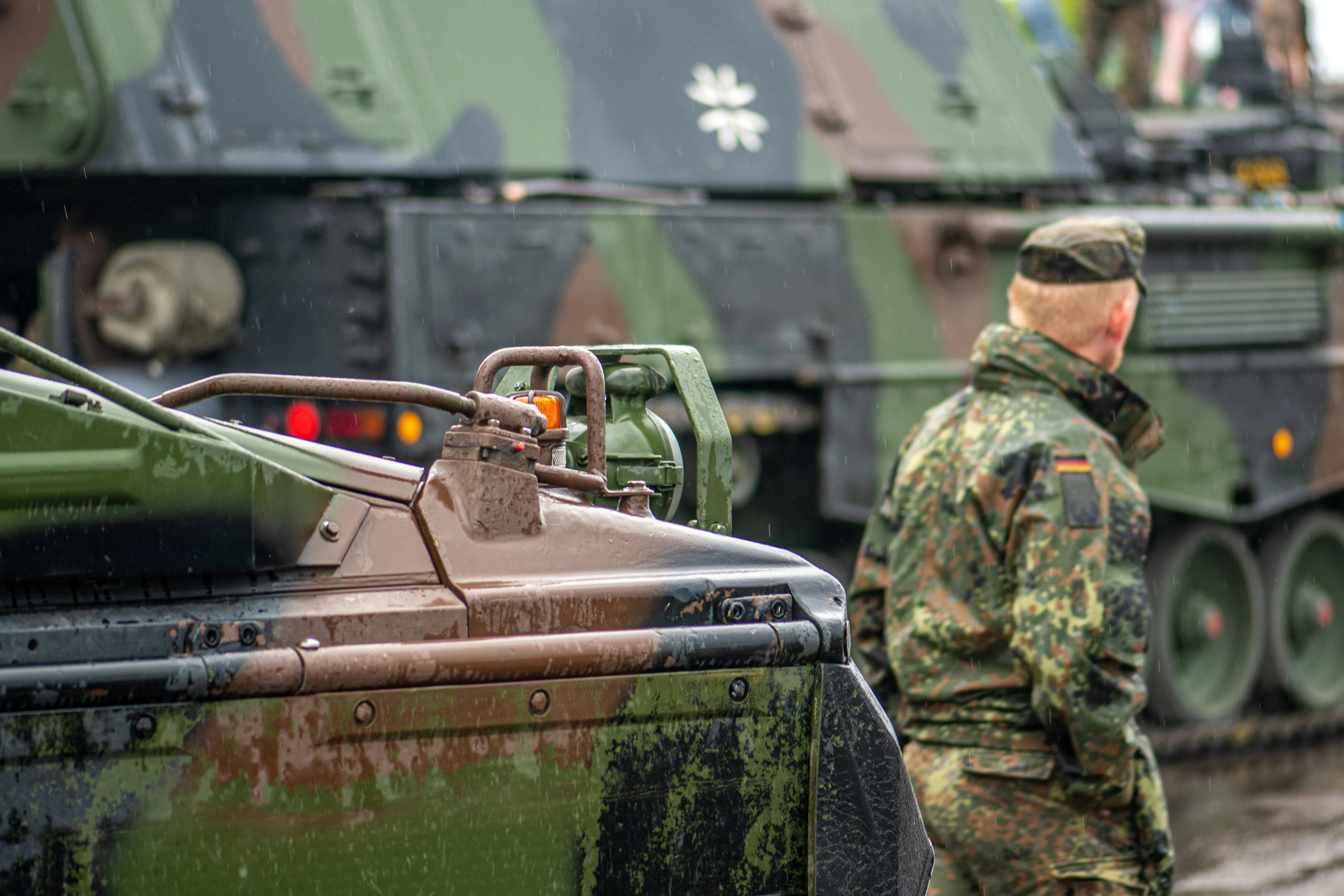 The Slippery Slope to Direct War Involvement
Even if German soldiers were officially assigned only to “securing” or “logistical” roles, the risk of escalation would remain acute. A drone strike, a missile malfunction, or a deliberate provocation could instantly confront Berlin with an impossible choice: retaliate or retreat under pressure. History shows that wars rarely begin with formal declarations. They begin with incremental steps, misunderstood signals, and political commitments that become impossible to reverse. A Bundeswehr deployment in Ukraine would be precisely such a step.
Why the Pressure Comes from Paris and London
France and the United Kingdom are acting in line with their strategic cultures. Both are nuclear powers, permanent members of the UN Security Council, and accustomed to operating with higher levels of military risk.
Germany’s position is fundamentally different:
• Germany would serve as Europe’s primary logistical hub.
• Its economy would be a prime target for asymmetric retaliation.
• The domestic political cost would be significantly higher than in Paris or London.
In short, Germany would assume the greatest risk without exercising strategic control.
Legal and Political Fault Lines
Any armed Bundeswehr deployment requires parliamentary approval. Yet even with a formal mandate, the central problem would remain unresolved: once German troops are treated as enemy forces by Russia, the legal fiction of a “peace mission” collapses. At that point, legal ambiguity would turn into a political crisis—one that would test Germany’s constitutional order and social cohesion alike.
Interim Conclusion
German participation in a “peace mission” in Ukraine would not represent responsible stabilization. It would amount to a high-risk strategic experiment with unpredictable consequences.
But the military dimension is only half the story.
The critical follow-up question is political:
What would such a deployment mean for Germany’s internal stability—and for Chancellor Merz personally?
Bilder: depositphotos / screensh
Die Meinung des Autors/Ansprechpartners kann von der Meinung der Redaktion abweichen. Grundgesetz Artikel 5 Absatz 1 und 3 (1) „Jeder hat das Recht, seine Meinung in Wort, Schrift und Bild frei zu äußern und zu verbreiten und sich aus allgemein zugänglichen Quellen ungehindert zu unterrichten. Die Pressefreiheit und die Freiheit der Berichterstattung durch Rundfunk und Film werden gewährleistet. Eine Zensur findet nicht statt.“
Quelle/n
Reuters (08.01.2026) – Russland: Ausländische Truppen in der Ukraine wären „legitime Ziele“
Reuters (06.01.2026) – US stützt Sicherheitsgarantien; Debatte über europäische Truppen/Mechanismen
The Guardian (06.01.2026) – UK/Frankreich „ready to deploy troops“ nach Waffenstillstand
www.theguardian.com/world/2026/jan/06/uk-france-ready-to-deploy-troops-to-ukraine-after-ceasefire
n-tv (Jan 2026) – Debatte über Einsatzgebiet/Bundeswehr-Beteiligung
www.zeit.de/politik/ausland/2026-01/verhandlungen-ukraine-deutsche-soldaten-5vor8
Euronews DE (07.01.2026) – Frankreich/Großbritannien und Truppenpläne nach Friedensabkommen
de.euronews.com/my-europe/2026/01/07/frankreich-grossbritannien-bodentruppen-ukraine
Deutscher Bundestag – Parlamentsbeteiligungsgesetz (Grundsatz Bundestagsmandat)
BMVg – Wie über bewaffnete Einsätze entschieden wird (Parlamentsvorbehalt erklärt)
www.bmvg.de/de/aktuelles/so-wird-ueber-bewaffnete-einsaetze-der-bundeswehr-entschieden-5442464
WDR Presseportal – ARD-DeutschlandTrend (06.03.2025): Meinung zu Bundeswehr-Friedensmission
presse.wdr.de/plounge/tv/das_erste/2025/03/20250306_ard_deutschlandtrend_ukraine.html
web.de / Civey (07.–08.01.2026) – Bewertung: Bundeswehr-Stationierung in Nachbar-NATO-Staaten
Wissenschaftliche Dienste Bundestag (08.04.2024) – Rechtsfragen Ukrainekrieg (TAURUS, Konfliktbeteiligung)